The First Holiday Without Them: How to Get Through It
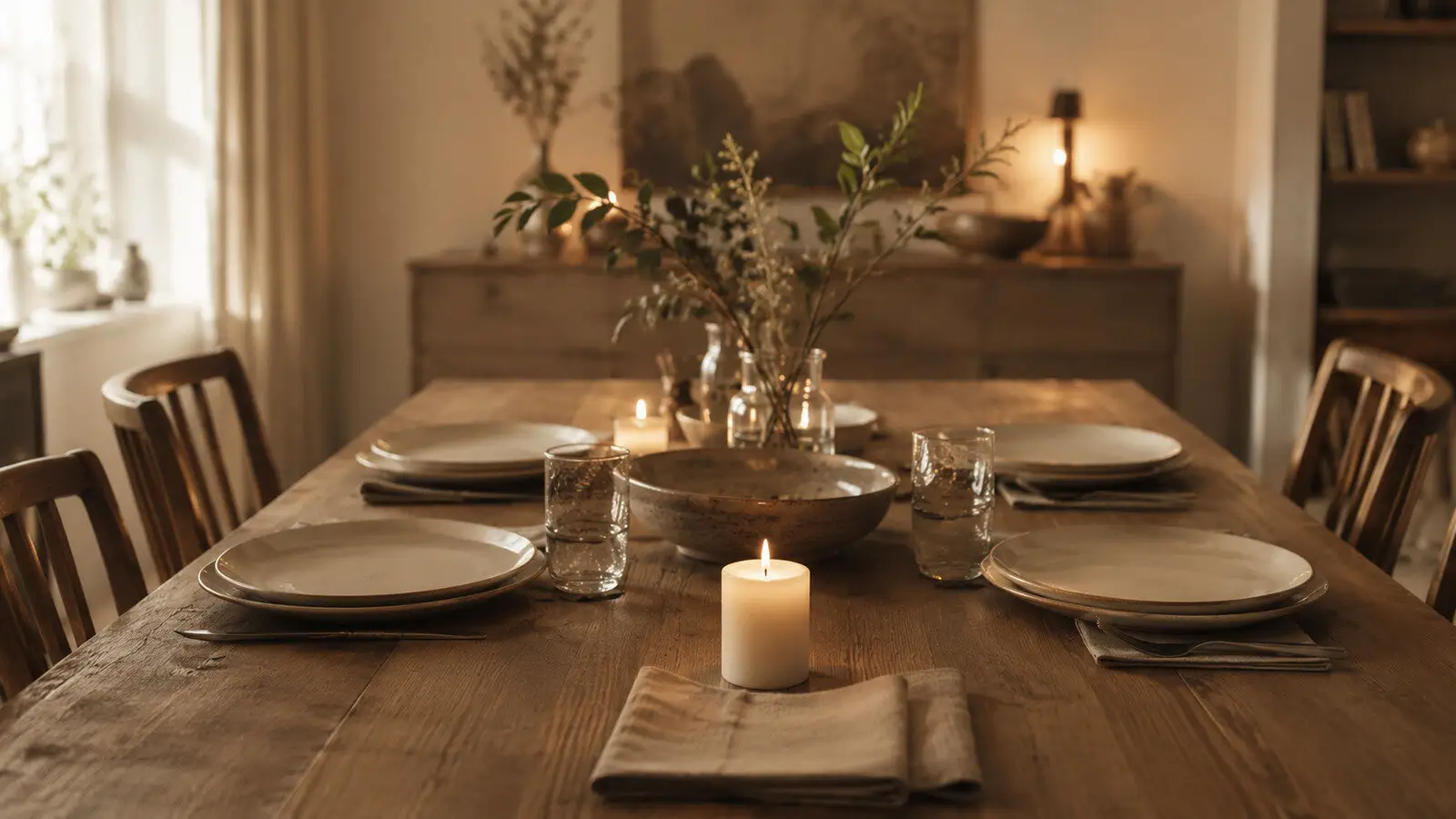
Somewhere around the second week of preparation, it lands: the table will have an empty chair. The recipe is theirs. The playlist is theirs. Everyone will be there except the one person the day was built around.
If you are looking ahead at your first holiday without someone, you are probably not dreading the holiday. You are dreading the version of yourself who has to get through it.
That fear is doing something useful, even if it doesn't feel like it. It means you have time to decide how this year goes, instead of arriving at the day and discovering it decided for you.
The Buildup Is Usually Worse Than the Day
Almost everyone who has done this reports the same thing, and it is worth knowing in advance: the anticipation is harder than the event.
For weeks you rehearse it. Every advert, every shop window, every "are you hosting this year?" is a small reminder of what is coming. By the time the day actually arrives, you have already grieved it a hundred times in your head.
The day itself tends to be survivable. Sometimes it is even good in patches — a story someone tells, a moment of ordinary laughter that catches you off guard and does not feel like betrayal.
This does not mean the day will be fine. It means the two weeks before it are their own separate ordeal, and you should plan for those too, not just for the date on the calendar.
Decide in Advance, Not on the Day
The single most useful thing you can do is make the decisions early, while you are calm enough to make them.
Left undecided, they get made at the worst possible moment — at 11pm on the night before, or in front of everyone at the table, when someone asks a question you have not thought about and you have to answer it while holding your composure together.
Sit down a few weeks out and go through the day in order. Who is coming. Where. What happens in the morning. Who cooks. What music. Whether their place is set. Whether anyone says something before the meal.
You do not have to make brave decisions. You have to make decisions.
Keep, Change, Skip
A framework that helps: take every tradition you had, and sort it into three piles.
Keep. The things that would hurt more to lose than to do. Often these are the specific ones — their stuffing recipe, the same walk after lunch, the terrible film everyone pretends to hate.
Change. The things you want, but not exactly as they were. Same meal, different house. Same gathering, at lunchtime instead of evening. Changing the setting removes the direct comparison to last year, which is often what makes a tradition unbearable rather than the tradition itself.
Skip. The things you cannot face this year. Skipping is not abandoning. You are not deciding for the rest of your life, only for this one.
Most people find the piles are uneven, and that is fine. Some years are mostly keep. The first year is often mostly change.
Say Their Name
There is a strange silence that falls over the first holiday, where everyone is thinking about the same person and nobody says their name, each one afraid of being the one who upsets the others.
The result is that the person you all miss becomes the one thing nobody can mention. It makes the room heavier, not lighter.
You can break it deliberately, and it usually helps to plan how:
- A toast before the meal. Short. One sentence is enough. "We're missing Dad today, and I'm glad we're all here."
- A lit candle on the table or the windowsill, with no explanation required. Everyone will understand.
- Their dish. Cook the thing they always made. Let someone say "this is Mum's."
- Going round the table with one memory each. This works better with some families than others — you will know which yours is.
None of this needs to be solemn. In most families the good version is funny: the year they set the oven on fire, the present they wrapped in newspaper. Grief and laughing about someone are not opposites.
The Empty Chair Question
People ask about this specifically, so: there is no right answer, and both answers are common.
Some families set the place, because leaving it out feels like pretending. Some deliberately reconfigure the table — a round table instead of a long one, different seats for everyone — so there is no gap to look at.
The only version that tends to go badly is the unspoken one, where nobody discusses it and someone is blindsided. Ask beforehand. "Are we setting Dad's place?" is a hard sentence to say and a much easier one than the alternative.
You Are Allowed to Leave
Give yourself an exit before you need it.
Drive separately so you are not dependent on someone else's timing. Decide in advance that you might leave after the meal rather than staying for the evening. Tell one person — a sibling, a friend — that you might need to disappear for twenty minutes, so you have an ally rather than an audience.
Knowing you can leave often means you do not have to. It is the trapped feeling that makes people panic, more than the grief itself.
When Family Wants Different Things
This is the part nobody warns you about: your family will not grieve on the same schedule, and the holiday is where that collides.
One person wants everything exactly as it always was, because the ritual is the comfort. Another cannot bear to walk into that house. A third wants to go abroad and skip it entirely. All three are grieving correctly.
Two things help.
Name it out loud rather than negotiating in code. "I know you want to be at the house and I can't do it this year" is a workable conversation. Silence followed by a last-minute cancellation is not.
Split the day if you have to. Morning at one house, afternoon at another. Nobody gets the whole thing they wanted; everybody gets some of it. That is a better outcome than one person carrying the day they cannot face so that nobody has to have the conversation.
If it comes to it: you are allowed to disappoint people this year. You are allowed to disappoint people who are also grieving. That is not selfishness, and it will not be held against you as long as you say it kindly and early.
What to Do With the Gap in the Day
Holidays are long. There is usually an hour in the middle where the activity stops and the absence gets loud.
Plan something for it. Not a distraction exactly — a walk, a job, a visit to somewhere they liked. Something that gives the hour a shape.
Some people use it for something deliberate: writing them a letter, going through photographs, adding a memory to their memorial page. If the day falls near their birthday, the birthday of someone who died raises its own questions. A structured way to think about the person is easier than the unstructured version that arrives on its own.
If You Are Spending It Alone
Being alone on a holiday is different from being lonely, but the first holiday after a loss can be both.
If you are on your own by choice, protect the choice: decide what you will do with the day, and make it something rather than nothing. Alone with a plan is very different from alone with an empty afternoon.
If you are on your own not by choice, this is the one situation where it is worth actively reaching out early rather than waiting to be invited. People assume you have plans. They assume someone else has thought of you. Saying "I don't have anywhere to be this year" is not an imposition — most people are glad to be told, and quietly relieved to have something concrete to offer.
Next Year Will Be Different
Not necessarily easier — for some people the second year is harder, because the shock has worn off and the permanence has landed. But different.
Most people find the traditions come back gradually and in altered form. A dish stays. A location changes for good. Something new starts that has nothing to do with how it used to be.
You are not deciding, this year, what the rest of your holidays look like. You are getting through one day, in whatever way costs you least. That is the whole objective.
FAQ
Should we still celebrate at all? Whatever you choose is fine, and skipping entirely is a legitimate option for the first year. The only version worth avoiding is drifting into the day with no decision made, because that is how people end up in a situation none of them chose.
How do I answer "how are you?" all day? Have one short answer ready and reuse it. "Up and down, but glad to be here" ends the exchange kindly without inviting a longer conversation you may not want. You do not owe anyone the full report.
My kids want everything to be normal. Do I fake it? Partly, and that is allowed. Children generally cope better with a parent who is visibly sad and present than with one performing fine. Keeping the structure of the day while being honest that you miss them is usually the right balance.
Is it wrong to enjoy myself? No. Enjoying an hour of the day is not a verdict on how much you loved them, and it does not undo anything. Most people are ambushed by a good moment at some point and feel guilty about it afterwards. The guilt is common. It is not evidence of anything.
What about Christmas specifically? Christmas has its own problems — a month-long buildup, gifts, stockings, and New Year arriving right behind it. We wrote about grieving at Christmas separately.
GetMemorial helps families build beautiful, lasting online memorials in minutes — a permanent home for photos, stories, and the traditions you want to keep. Make a free online memorial for someone you love.